
 Tim Kencang.in
Without tracking, all ad visits look the same in Google Analytics: "direct" or "social". UTM parameters label every link so you know exactly which ad brought visitors and, later, buyers. The problem is that URLs with UTM parameters become long and unattractive. Short links solve this: UTM parameters sit behind a neat alias, and you get two layers of data at once.
The five UTM parameters
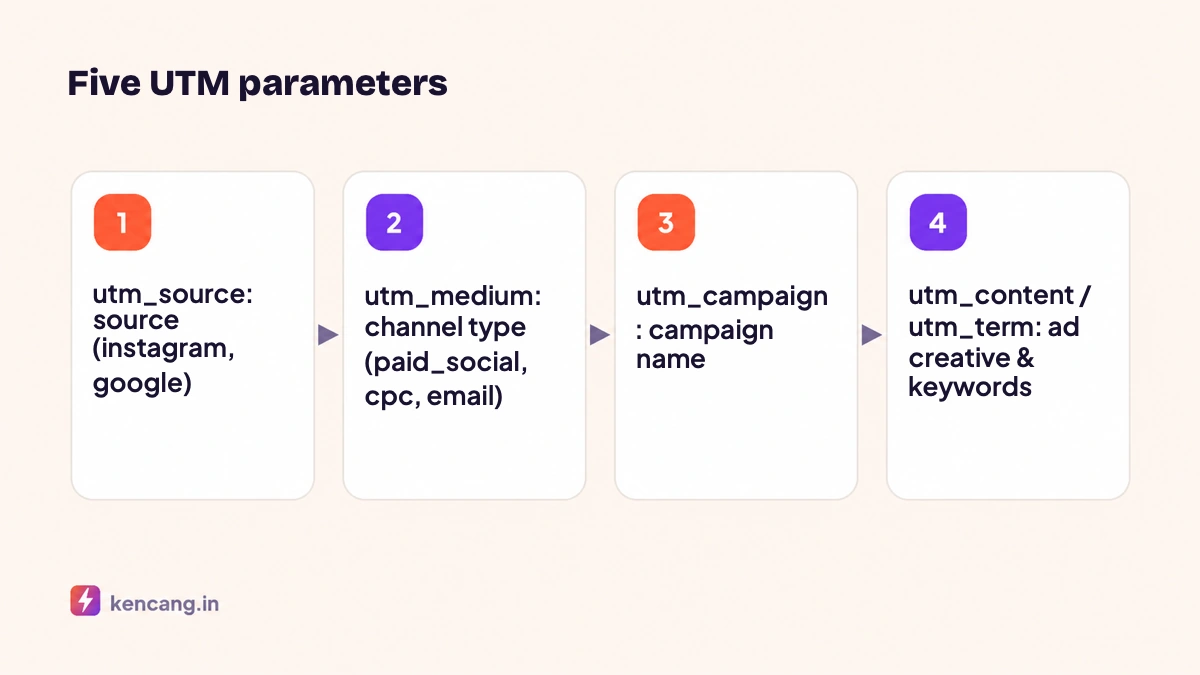
- utm_source (required): traffic origin. Example:
instagram,google,tiktok,newsletter. - utm_medium (required): channel type. Example:
paid_social,cpc,email,qr. - utm_campaign (required): campaign name. Example:
sale_2026,launch_shoes. - utm_content: differentiate creatives within the same campaign. Example:
video_a,carousel_b. - utm_term: keywords, especially for search ads.
Find the official definitions and URL builder in the Google Analytics documentation.
Consistent naming conventions
UTM is case sensitive. Instagram and instagram become two separate rows in reports. Agree on team rules from the start:
- Use lowercase and separate words with underscores.
- Use a fixed list of values for source and medium. Save it in a shared spreadsheet.
- Campaign format:
theme_yearorproduct_month. - Do not enter personal data into the parameters.
Combining UTM parameters with short links
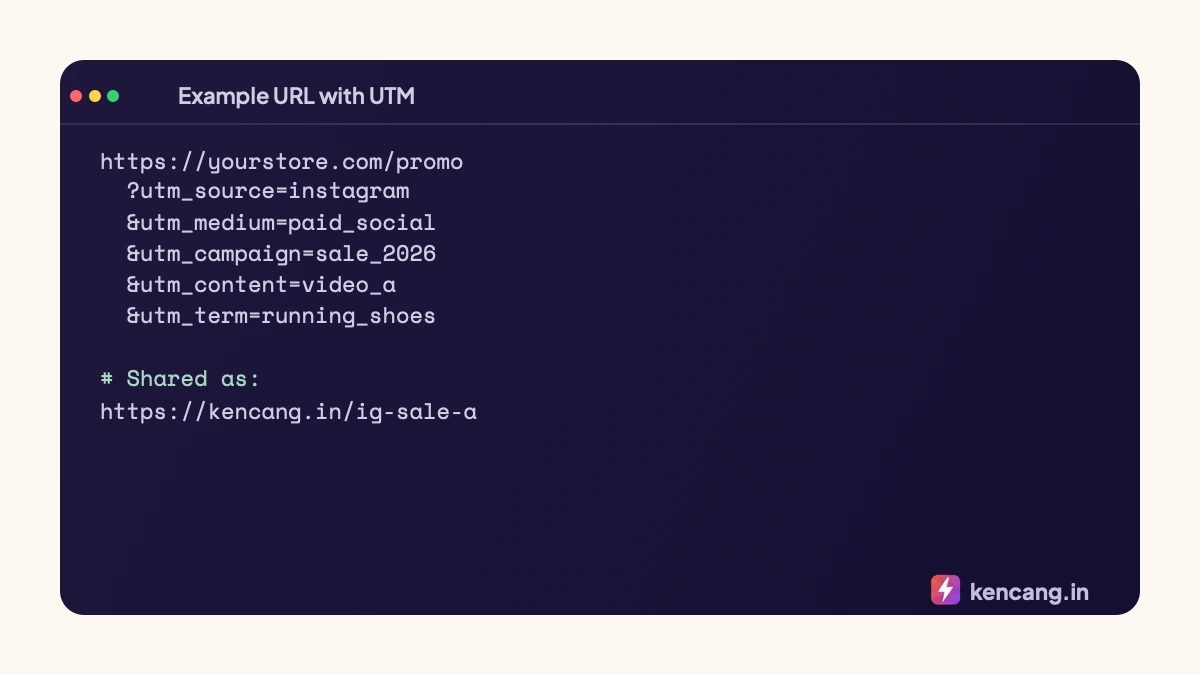
There are two ways to add UTM parameters on Kencang.in:
- Paste the complete URL with UTM parameters as the link destination. This is simple and suits URLs already created in a UTM builder.
- Use Parameter Builder in the link form. Enter a clean URL, then add parameters one by one. The parameters are stored in a structured form and are easy to edit without retyping the URL.
Create one short link per platform and creative combination, for example kencang.in/ig-sale-a and kencang.in/ig-sale-b. Kencang.in click statistics and Google Analytics session data then complement each other: Kencang.in counts raw clicks, including visits where the page failed to load, while GA counts sessions and conversions.
Examples by platform
Meta (Facebook and Instagram Ads)
Meta provides a "URL parameters" field at the ad level with dynamic variables such as {{ad.name}}. Alternatively, use a Kencang.in short link as the destination URL and include UTM parameters in it; this makes it easier to change landing pages without editing live ads, which would reset the algorithm's learning. For conversion tracking, add Meta Pixel to the short link.
Google Ads
Google Ads tags automatically with gclid if auto-tagging is enabled, but manual UTM parameters remain useful for other analytics tools. Use utm_medium=cpc and utm_term for keywords.
TikTok Ads
TikTok does not always send a clear referrer, making UTM parameters the only way to identify its traffic in analytics. Use utm_source=tiktok and utm_medium=paid_social.
Printed materials and QR codes
For QR codes on packaging or banners, use utm_medium=qr and utm_content containing the location, for example mall_a. Pair with dynamic QR codes so that the destination can be changed.
Common mistakes
- Using UTM parameters on internal links on your own site; this breaks sessions and disrupts attribution.
- Changing capitalization or spelling between campaigns.
- Leaving source and medium empty so GA groups them as "(not set)".
- Creating one link for every platform, then struggling to interpret the results.
Reading the results
In the Kencang.in dashboard, compare clicks for each alias; in Google Analytics, open the Acquisition report and filter by campaign. If clicks are high but sessions are low, the landing page may be slow or blocked. See our guide to the statistics panels in the article on reading the analytics dashboard. To automate the creation of links with UTM from a spreadsheet, see the article Zapier and Google Sheets.
Frequently asked questions
Do UTM parameters affect SEO?
No, as long as you do not use them on internal site links. UTM parameters are read only by analytics tools. Google recommends keeping canonical URLs clean, and placing UTM parameters behind a short link keeps shared URLs tidy.
Do I need to fill in all five parameters?
No. Source, medium, and campaign are required for reports to be read correctly. Content and term are optional and useful when testing several ad creatives or keywords within a campaign.
Why is traffic from TikTok recorded as direct?
Because the TikTok application, like WhatsApp and some other applications, does not send referrer information to the browser. The only way to recognize this traffic is with UTM or a short link alias specific to that channel.
How do I keep UTM naming consistent in a large team?
Create a shared spreadsheet containing a list of allowed values for source and medium, as well as campaign naming patterns. Better yet, automate the creation of links with UTM from that spreadsheet via API so there's no manual typing involved.